
Simulating Risks Before They Become Non-Conformities
What if your food safety system could show the next risk before it becomes a non-conformity?
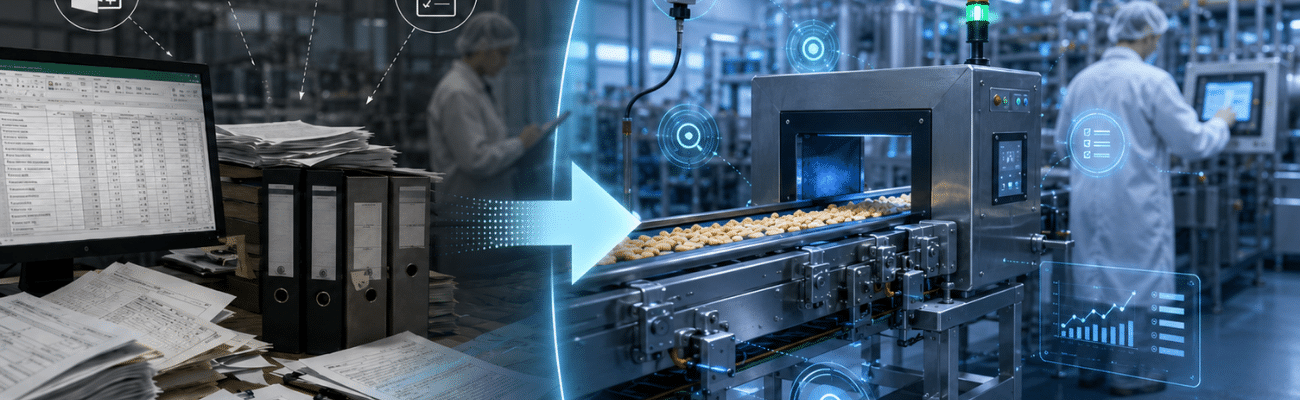
In many food manufacturing facilities, food safety teams still spend a significant amount of time documenting what has already happened. Audit findings are recorded after the audit. Corrective actions are opened after the issue is detected. ATP results are reviewed after cleaning is completed. Environmental monitoring results are evaluated after samples are collected. Customer complaints are investigated after the product has already reached the market.
This structure is necessary, but it is also reactive.
The future of food safety management is moving toward a more predictive model. Instead of only asking, “What happened?”, quality and food safety teams are starting to ask, “What could happen next?”
This is where the concept of a food safety digital twin becomes highly relevant.
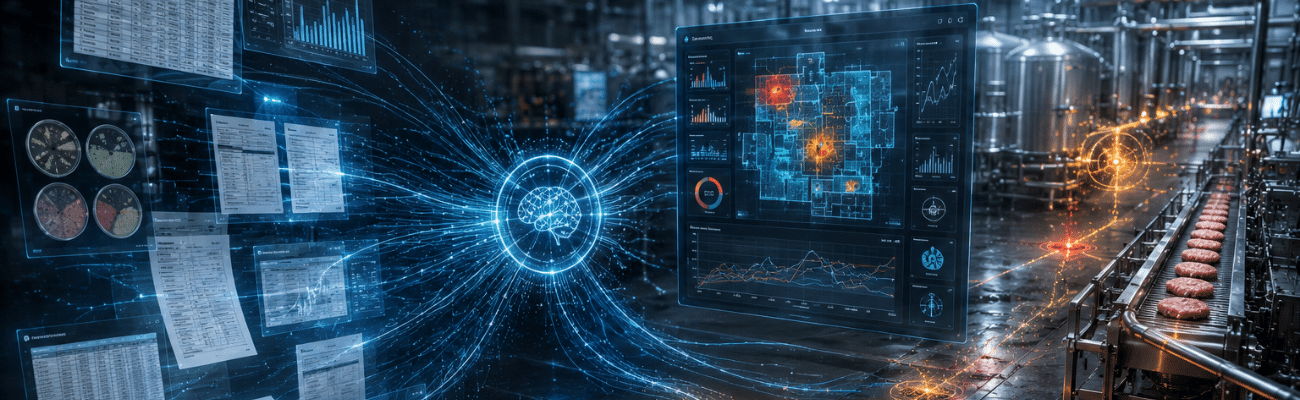
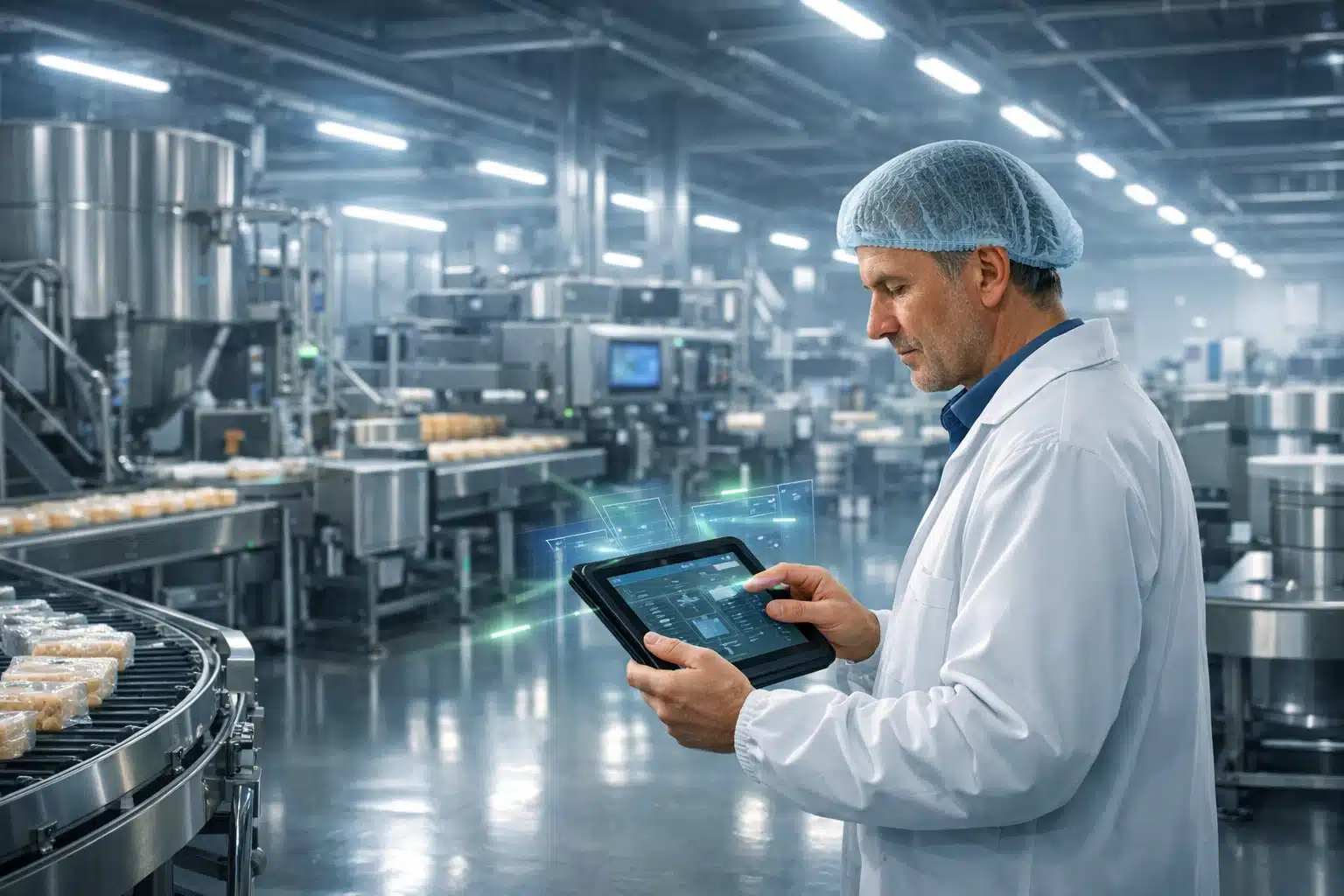
A digital twin is a virtual representation of a real process, system, or environment. In food manufacturing, it can help connect operational data, hygiene records, environmental monitoring results, audit findings, equipment information, supplier data, and corrective actions into one intelligent risk model.
Recent research on digital twin-centered food safety management systems highlights the potential of combining IoT-based sensing, AI-driven predictive analytics, and traceability technologies to support continuous monitoring, early risk detection, predictive risk assessment, and stronger HACCP implementation.
For food manufacturers, this creates a powerful shift: from documenting food safety performance to simulating and predicting food safety risk.
What Is a Food Safety Digital Twin?
A food safety digital twin is a digital model that reflects the food safety conditions, risks, and control points of a real production environment.
It does not need to start as a complex 3D simulation of an entire factory. For many food manufacturers, the first practical step is much simpler: connecting food safety data that is currently stored in separate systems, files, forms, and departments.
A food safety digital twin may use data from:
- Sanitation records
- ATP test results
- Environmental monitoring data
- Audit findings
- CAPA records
- Customer complaints
- Supplier performance data
- Equipment and maintenance history
- Pest control records
- Temperature and process controls
- Training completion records
- Product, batch, line, and location information
When these data points are analyzed together, the system can begin to show patterns that are difficult to see manually.
For example, a facility may notice that recurring sanitation failures are concentrated on a specific line, after specific production runs, or following certain maintenance activities. Another site may discover that environmental monitoring positives increase during particular seasonal conditions or after layout changes.
In this context, the digital twin becomes more than a dashboard. It becomes a living risk model.
Why Traditional FSMS Processes Are Often Reactive
Traditional food safety management systems are built around documentation, verification, and corrective action. These processes are essential for compliance and audit readiness. However, they often depend on past events.
A sanitation checklist confirms that cleaning was completed.
An ATP result confirms whether hygiene verification passed or failed.
A CAPA record shows what action was taken after a problem.
An audit report identifies gaps after an assessment.
A complaint investigation begins after the customer reports an issue.
These records are valuable, but they usually answer the same question:
What happened?
A predictive FSMS should go further. It should help teams understand:
- Which risks are becoming more frequent?
- Which line, area, or product group shows early warning signals?
- Which corrective actions are not preventing recurrence?
- Which hygiene results are trending in the wrong direction?
- Which supplier, site, or process needs closer monitoring?
- Which data gaps may weaken audit readiness?
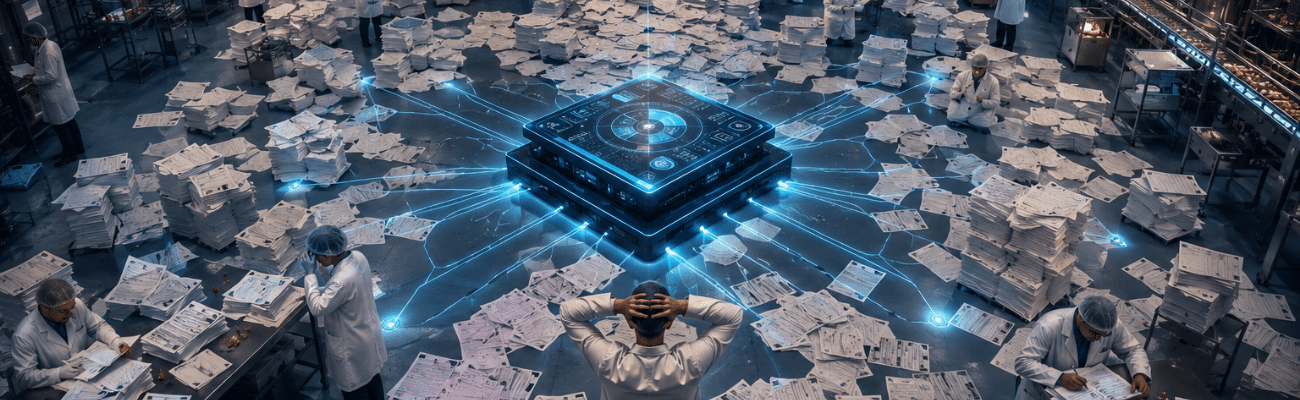
The challenge is not the lack of data. Most food manufacturers already generate a large amount of food safety data every day. The real challenge is that this data is often disconnected.
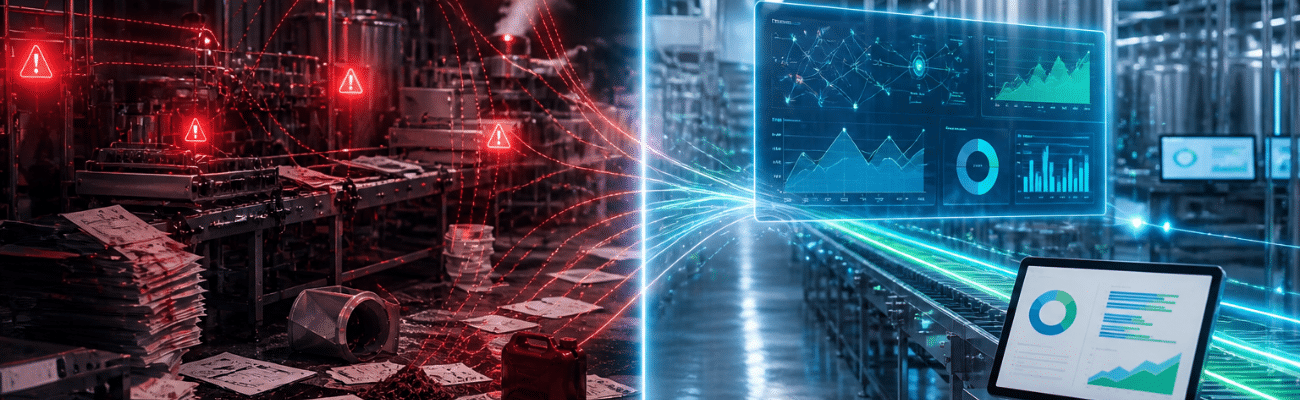
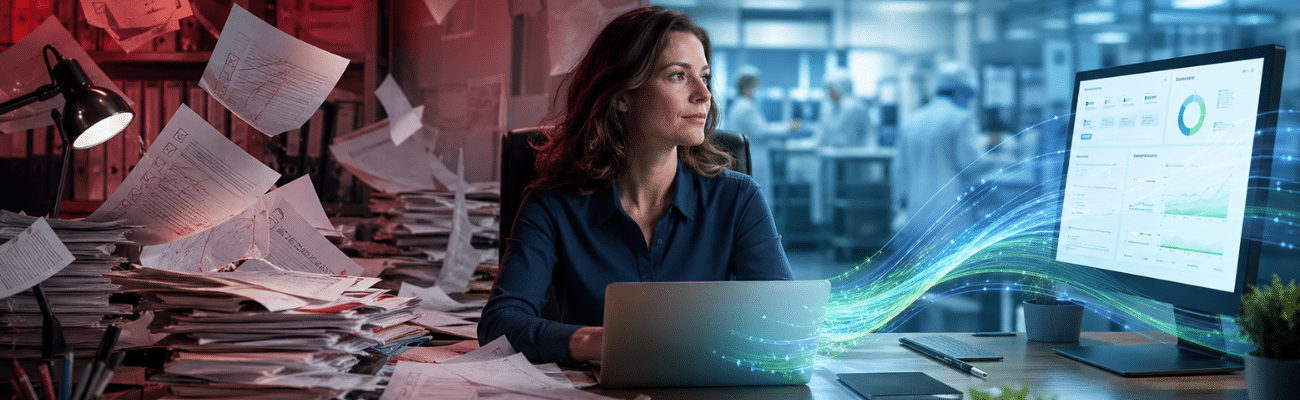
When records are stored in Excel files, paper forms, emails, PDFs, and separate systems, it becomes difficult to see the full picture. Risk signals remain hidden until they become visible as non-conformities.
From Records to Risk Signals
A food safety digital twin changes the role of data.
Instead of treating each record as a static document, it treats each record as a potential risk signal.
A single failed ATP result may not mean there is a serious hygiene problem. But repeated borderline ATP results on the same equipment may indicate a developing sanitation risk.
One environmental monitoring positive may be managed with corrective action. But recurring findings in nearby zones may suggest a deeper contamination route.
One overdue CAPA may seem operationally manageable. But repeated delays across multiple sites may indicate a cultural or resource-related issue.
One supplier document gap may be a minor administrative issue. But repeated document delays from high-risk suppliers may create a compliance risk.
This is the real value of predictive food safety management. It does not replace professional judgment. It strengthens it with connected data.
| Traditional Record | Hidden Risk Signal | Predictive FSMS Value |
|---|---|---|
| ATP result | Repeated hygiene weakness | Early sanitation risk detection |
| EMP finding | Possible contamination route | Zone-based trend analysis |
| CAPA record | Recurring unresolved issue | Prevention-focused action tracking |
| Audit finding | Systemic compliance gap | Cross-site comparison |
| Supplier record | Documentation or approval risk | Risk-based supplier monitoring |
| Maintenance history | Equipment-related contamination risk | Link between technical and food safety data |
This approach helps food safety teams move from recordkeeping to risk intelligence.
Simulating Contamination, Hygiene, and Compliance Risks
The most powerful promise of a food safety digital twin is simulation.
In a mature digital twin model, teams can explore how changes in process conditions, cleaning frequency, supplier performance, environmental results, or equipment status may affect food safety risk.
Research in food processing shows that digital twin technology can create dynamic virtual representations of food processes, supporting real-time monitoring, predictive analytics, and virtual prototyping.
For food safety teams, this idea can be applied in practical ways.
- A facility could evaluate whether sanitation frequency should be adjusted for equipment with repeated hygiene failures.
- A quality manager could compare environmental monitoring trends before and after a layout change.
- A corporate food safety team could identify which sites show increasing audit risk before the next external assessment.
- A supplier quality team could prioritize high-risk suppliers based on document status, non-conformities, and historical performance.
- A hygiene manager could detect whether recurring ATP failures are linked to specific equipment, shifts, or product types.
This does not mean every food manufacturer must immediately build a fully automated simulation engine. The first step is building the data foundation that makes simulation possible.
Without centralized, structured, and comparable data, predictive food safety remains only an idea.
Why Traceability Data Makes the Digital Twin Stronger
A food safety digital twin becomes more valuable when it is connected to traceability data.
Food safety risks do not exist in isolation. They are connected to products, batches, raw materials, suppliers, equipment, lines, locations, employees, and time periods.
This is why traceability is becoming more important in global food safety conversations. The FDA Food Traceability Final Rule establishes additional recordkeeping requirements for certain foods and focuses on Key Data Elements associated with Critical Tracking Events across the supply chain. The FDA page also notes that enforcement is not expected before July 20, 2028, following a congressional directive.
Even for companies not directly subject to this rule, the direction is clear: food safety systems need better data structure, faster access to records, and stronger connections between events.
A digital twin supported by traceability data can help answer questions such as:
- Which batches were affected by a specific risk?
- Which supplier materials were used in a non-conforming product?
- Which production line shows recurring hygiene issues?
- Which sites are reporting similar findings?
- Which corrective actions reduced recurrence?
- Which process changes improved risk performance?
Traceability turns isolated food safety records into connected intelligence.
Digital Twin vs. Dashboard: What Is the Difference?
Many food manufacturers already use dashboards. Dashboards are useful because they make performance visible. They show KPIs, trends, completion rates, open actions, audit scores, and overdue tasks.
However, a dashboard usually shows what is happening or what has already happened.
A digital twin goes further.
It connects data, reflects the operational reality of the facility, and supports prediction or simulation. A dashboard may show that ATP failures increased last month, open CAPA actions and audit scores by site. On the other hand a digital twin approach may help explain why they increased and where the next risk is likely to appear, show whether similar actions have failed before, whether recurrence risk is increasing, and which process area needs preventive attention and connect audit findings with sanitation data, EMP trends, supplier issues, training gaps, and corrective action delays.
The difference is not visual. The difference is intelligence.
How AI Supports a Food Safety Digital Twin
AI plays an important role in making a food safety digital twin useful.
Food safety data can be complex, inconsistent, and spread across many sources. AI can help identify patterns, compare large volumes of records, detect recurring issues, and highlight unusual changes.
For example, AI-supported analysis can help teams identify:
- Repeated audit findings across different sites
- Similar root causes hidden in different CAPA descriptions
- Hygiene performance decline before a failure occurs
- Increasing risk in a specific production area
- Supplier-related document or non-conformity patterns
- Environmental monitoring trends that require closer attention
- Delayed corrective actions that may increase compliance risk
However, AI should not be positioned as a replacement for food safety professionals. Food safety decisions require context, expertise, and accountability.
The best use of AI is to support experts by making hidden patterns visible earlier.
Preparing Your Data Infrastructure Now
The food safety digital twin may sound like a future concept, but the preparation starts with today’s data.
Food manufacturers that want to move toward predictive FSMS should begin by improving the structure, consistency, and accessibility of their food safety records.
Key preparation steps include:
- Centralizing food safety data
Move critical records away from scattered files and disconnected systems. - Standardizing forms and categories
Use consistent fields for sites, lines, products, findings, root causes, actions, and risk levels. - Connecting related processes
Link sanitation, EMP, CAPA, audits, complaints, suppliers, and maintenance where relevant. - Improving traceability
Make sure records can be connected to products, batches, locations, time periods, and responsible teams. - Using trend analysis regularly
Do not wait for audits to review performance data. - Applying AI carefully
Use AI to support pattern recognition, risk prioritization, and decision-making, while keeping expert review in place.
Companies that build this foundation now will be better prepared for future regulatory expectations, customer requirements, and operational complexity.
The Future of FSMS Is Predictive
The next generation of food safety management will not be defined only by digital forms. It will be defined by connected, intelligent, and predictive systems.
Food manufacturers will still need records, audits, checklists, corrective actions, and verification activities. These will not disappear. But their value will increase when they are connected into a broader risk model.
A food safety digital twin helps quality and food safety teams move from isolated documentation to connected intelligence.
- It helps teams see patterns earlier.
- It helps managers prioritize risk more effectively.
- It helps sites learn from previous findings.
- It helps organizations prepare for audits with stronger evidence.
- It helps food safety become more preventive, not only corrective.
The future of food safety will not only be about documenting what happened. It will be about predicting what could happen next.
Next Steps
For food companies seeking efficiency, Qualiqo offers a reliable, all-in-one sanitation management solution. Qualiqo is designed to streamline food safety and sanitation processes for better operational control. It helps businesses track cleaning schedules, verify tasks, and meet food safety standards. Features include audit management, real-time alerts, and complete traceability across operations. With Qualiqo, food businesses embrace digital transformation and reinforce their food safety commitment.
Did you get enough information about “Food Safety Digital Twin”
Qualiqo is here to help you. It answers your questions about sanitation and hygiene, Lab. & EMP, IPM and Pest Control. We also provide information about the main features and benefits of the software.
We help you access the Qualiqo demo and even get a free trial.
FAQ
A food safety digital twin is a digital model that reflects the risks, controls, records, and performance indicators of a real food manufacturing environment. It helps teams connect data and identify potential risks earlier.
A dashboard shows performance data and trends. A digital twin goes further by connecting different data sources and supporting prediction, simulation, and deeper risk analysis.
Yes, but most manufacturers should start with the data foundation first. Centralized records, standardized forms, traceability links, and connected food safety processes are essential before advanced simulation becomes practical.