Food Safety Digital Twin

Simulating Risks Before They Become Non-Conformities What if your food safety system could show the next risk before it becomes a non-conformity? In many food manufacturing facilities, food safety teams still spend a significant amount of time documenting what has already happened. Audit findings are recorded after the audit. Corrective actions are opened after the…


Foreign Material Control in Food Manufacturing

How to Manage Physical Contamination Risks Food safety management is often discussed through microbiological risks, allergens, sanitation programs, supplier documents, and audit findings. However, one of the most visible and critical risks in food manufacturing is foreign material contamination. A piece of metal, glass, hard plastic, stone, bone, wood, or equipment fragment found in a…

Leading vs. Lagging KPIs in Food Safety

Food safety teams generate and review large volumes of data every day: audit findings, supplier records, corrective actions, training logs, hygiene checks, environmental monitoring results, customer complaints, and process deviations. But the real question is not whether the data exists. The real question is: Does your data help you prevent food safety risks, or does…

Managing Pathogen Risk

The Invisible Threat and Structural Flaws in Quality Management In food safety, the most dangerous assumption is believing unseen risks cause no harm. Microbiological swab sampling verifies sanitation effectiveness across floors, drains, equipment structures, and air handling systems. These activities form the foundation of every Environmental Monitoring Program (EMP). However, the real crisis extends beyond…

Predictive Quality Management

For years, quality management has been built around a simple idea: find the problem, fix it, and move on. Inspections are completed, reports are written, corrective actions are assigned.And on paper, everything looks under control. But in reality, there is a fundamental flaw in this approach: By the time you detect a problem, it has…

Food Defense and TACCP

Food Safety or Food Defense? Most executives in the food industry are well-versed in Food Safety; they understand pathogens, temperature control, and hygiene. However, in the modern world, risks are not always “accidental.” Food Defense aims to prevent intentional attacks on a food business or product, such as sabotage, ideological attacks, terrorism, or employee misconduct.…

Sanitation Exists, So Why Does Contamination Keep Returning?

In many food manufacturing facilities, sanitation programs are implemented on a regular basis. Cleaning plans are defined, appropriate chemicals are used, and all activities are properly documented. Yet one reality is frequently observed on the shop floor: contamination keeps returning. This situation does not usually mean that sanitation is not being performed. On the contrary,…

Risk-Based Environmental Monitoring Programs (EMP)

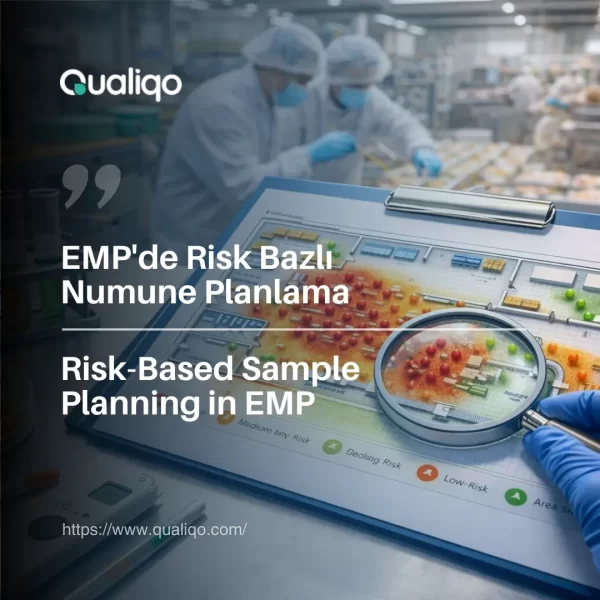
Risk-Based Sampling in Environmental Monitoring Programs (EMP) Environmental Monitoring Programs play a vital role in controlling microbiological risks in food production facilities. However, in many operations, EMPs are still treated as routine sampling activities conducted at fixed locations and predefined intervals. While this approach may support basic audit compliance, it often fails to reflect actual…