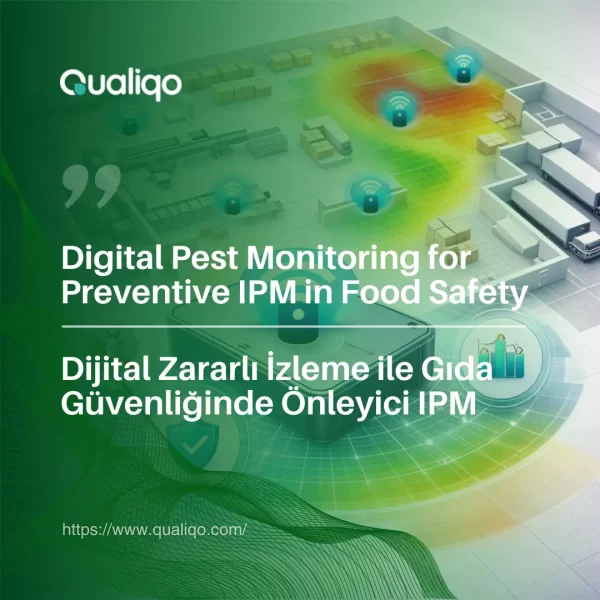
Digital Pest Monitoring for Preventive IPM in Food Safety

Data-Driven Pest Management Integrated with EMP For many years, pest management in food production facilities has been treated primarily as a control activity. Actions were taken only after pest activity was observed, records were reviewed mainly during audits, and problems were often addressed after they had already occurred. However, increasing audit expectations, multi-site operations, and…
Sanitation Performance Monitoring in Food Safety

Why Sanitation Performance Monitoring Matters in Food Safety In modern food production, sanitation is no longer just about completing cleaning tasks. It must be measured, verified, and continuously improved. Sanitation performance monitoring enables food manufacturers to move beyond checklists and gain real visibility into how effectively processes reduce contamination risks. Without monitoring• Cleaning effectiveness cannot…

Contamination Control in Food Safety

Ensuring Safe and Compliant Operations Food contamination remains one of the most critical challenges in the food industry. Contamination Control is the cornerstone of any Food Safety Management System (FSMS), ensuring that products are safe for consumption and compliant with standards such as HACCP and ISO 22000. 1. Understanding Contamination Contamination refers to the presence…

Digital Traceability for Efficient CIP Cleaning

In food production facilities, CIP cleaning processes are among the fundamental hygiene practices that ensure in-line equipment is cleaned safely, effectively, and consistently. However, this process involves far more than a seemingly standard cleaning cycle. Parameters such as temperature, duration, chemical concentration, pressure, and conductivity must progress at correct values, which is mandatory for food…

FDA Food Safety Updates

What Food Producers and Quality Teams Must Know The FDA has announced a series of reforms aimed at improving the safety of the U.S. food supply. These include: These changes are more than just regulatory updates. They signal a shift toward stricter safety standards and greater accountability in the food industry. For food producers, quality…

GHP and GMP in Food Safety

Managing Hygiene and Manufacturing Standards Digitally In food production, safety impacts not only product quality but also consumer health and brand reputation. Even a small oversight can lead to serious consequences. This is why standards such as GHP (Good Hygiene Practices) and GMP (Good Manufacturing Practices) are critical in the food industry. However, traditional paper-…

A Complete Guide to Choosing the Right FSMS

Why Software Is Reshaping Food Safety The global food industry is under more scrutiny than ever. With supply chains spanning multiple countries, strict regulations like HACCP, ISO 22000, FSMA, and GFSI standards, and rising consumer expectations for transparency, food companies cannot afford lapses in safety or sanitation. Traditional paper-based systems, manual checklists, or even spreadsheets…

Digital Food Safety

Digital Food Safety: The New Era of Secure Production Through Technology Food safety is a critical concern for both consumer health and the sustainability of businesses. Globalized supply chains, increasing regulations, and evolving consumer expectations demand a new approach to food safety processes. At this point, digital food safety emerges as a key concept. Digital…