Predictive Quality Management

For years, quality management has been built around a simple idea: find the problem, fix it, and move on. Inspections are completed, reports are written, corrective actions are assigned.And on paper, everything looks under control. But in reality, there is a fundamental flaw in this approach: By the time you detect a problem, it has…


Food Defense and TACCP

Food Safety or Food Defense? Most executives in the food industry are well-versed in Food Safety; they understand pathogens, temperature control, and hygiene. However, in the modern world, risks are not always “accidental.” Food Defense aims to prevent intentional attacks on a food business or product, such as sabotage, ideological attacks, terrorism, or employee misconduct.…

Food Safety Data Governance

The Structural Backbone of a Reliable FSMS Modern food manufacturing operates in a data-saturated environment. Every sanitation activity, environmental swab result, supplier approval, corrective action, temperature deviation and verification record generates information. Over time, organizations accumulate thousands of entries across departments. Yet despite this volume, many companies still struggle with delayed risk detection, audit anxiety,…

Sanitation Exists, So Why Does Contamination Keep Returning?

In many food manufacturing facilities, sanitation programs are implemented on a regular basis. Cleaning plans are defined, appropriate chemicals are used, and all activities are properly documented. Yet one reality is frequently observed on the shop floor: contamination keeps returning. This situation does not usually mean that sanitation is not being performed. On the contrary,…

Digital Maintenance and Equipment Hygiene

A Missing Link in Food Safety Management In food manufacturing, maintenance activities are often viewed through an operational lens—focused on uptime, efficiency, and cost control. However, from a food safety perspective, maintenance is far more than a technical necessity. Poorly managed maintenance processes can introduce significant contamination risks, compromise sanitation programs, and result in audit…

Sanitation Verification vs Validation

Ensuring Effective Cleaning Control within FSMS Sanitation practices are a fundamental component of food safety in production facilities. However, in many organizations, cleaning effectiveness is assessed primarily through visual inspections or periodic test results. While these methods indicate whether cleaning activities were performed, they do not always demonstrate whether they were performed correctly and effectively.…

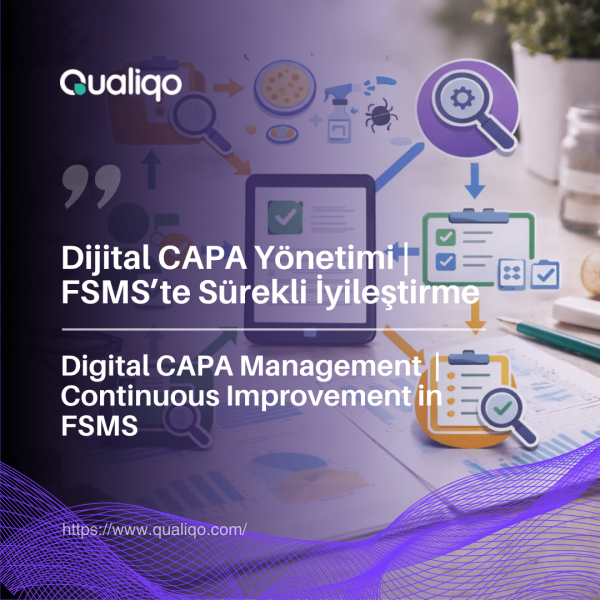
Digital Management of Corrective and Preventive Actions (CAPA) in FSMS

Enabling Continuous Improvement in Food Safety Identifying non-conformities is only the first step in food safety management. The real value lies in how these issues are analyzed, addressed, and prevented from recurring. In many organizations, CAPA processes are still managed through fragmented records and manual follow-ups. This often leads to repeated issues and inconsistencies during…

Risk-Based Environmental Monitoring Programs (EMP)

Risk-Based Sampling in Environmental Monitoring Programs (EMP) Environmental Monitoring Programs play a vital role in controlling microbiological risks in food production facilities. However, in many operations, EMPs are still treated as routine sampling activities conducted at fixed locations and predefined intervals. While this approach may support basic audit compliance, it often fails to reflect actual…