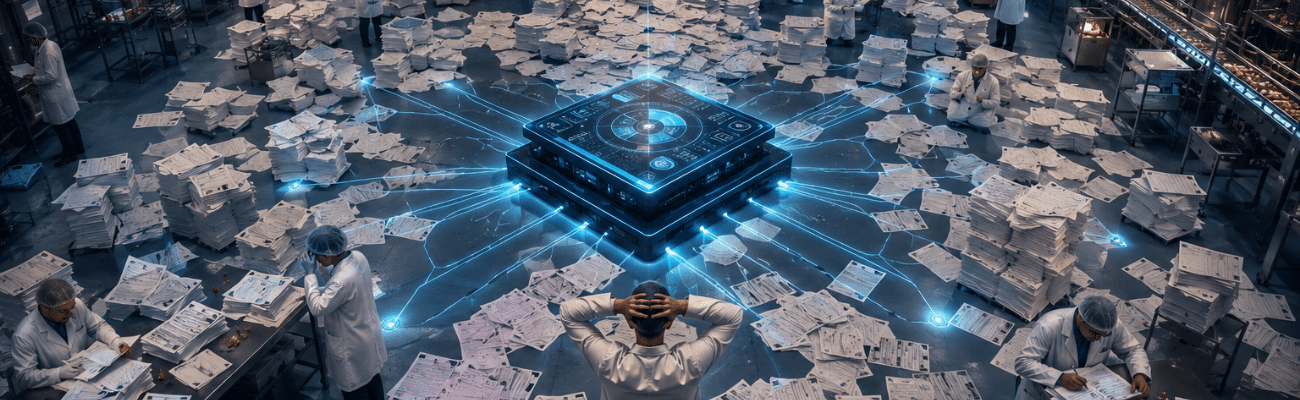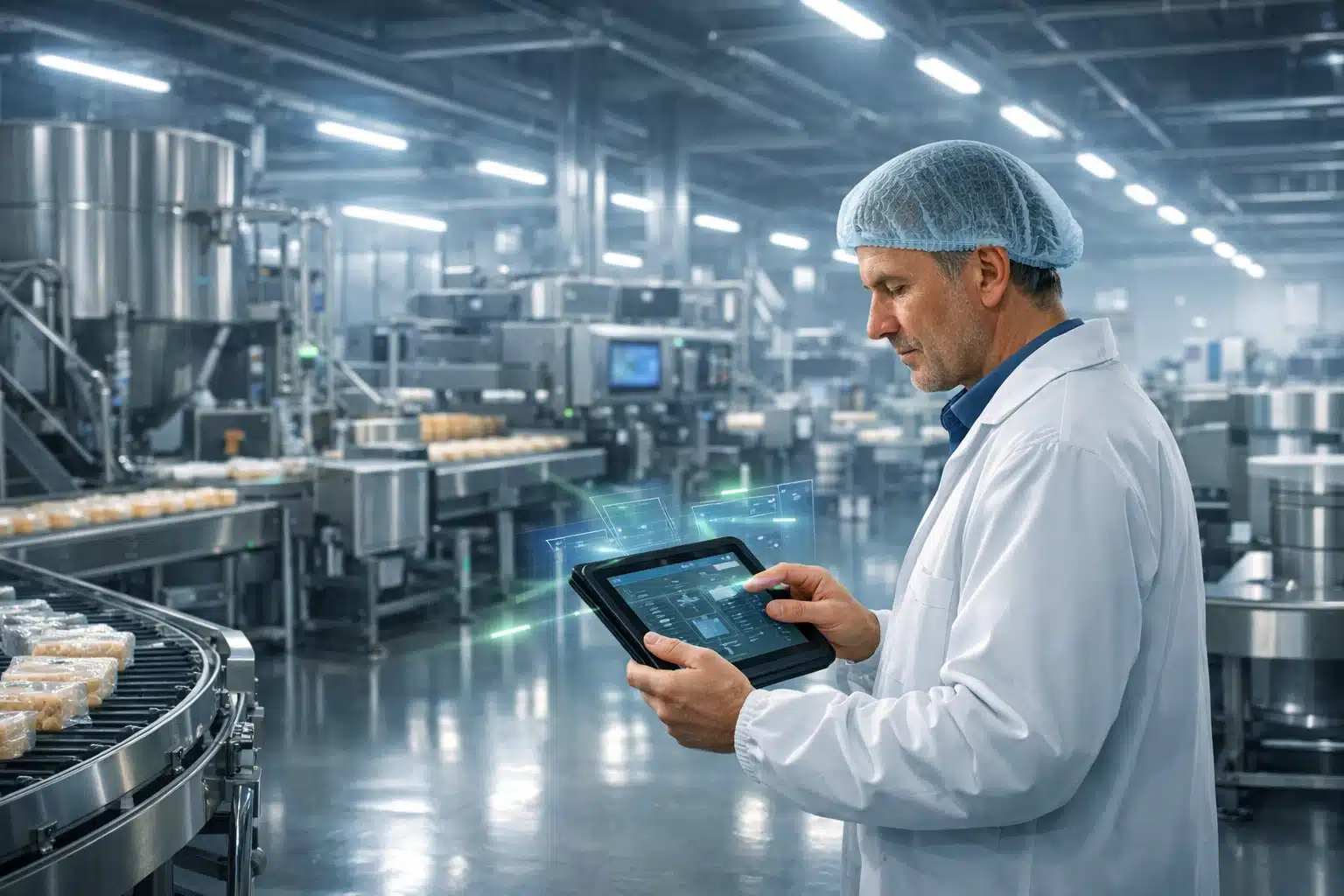

In food production facilities, CIP cleaning processes are among the fundamental hygiene practices that ensure in-line equipment is cleaned safely, effectively, and consistently. However, this process involves far more than a seemingly standard cleaning cycle. Parameters such as temperature, duration, chemical concentration, pressure, and conductivity must progress at correct values, which is mandatory for food safety and critical for equipment efficiency. In many facilities, this process is still managed through manual records. This increases both errors and costs.
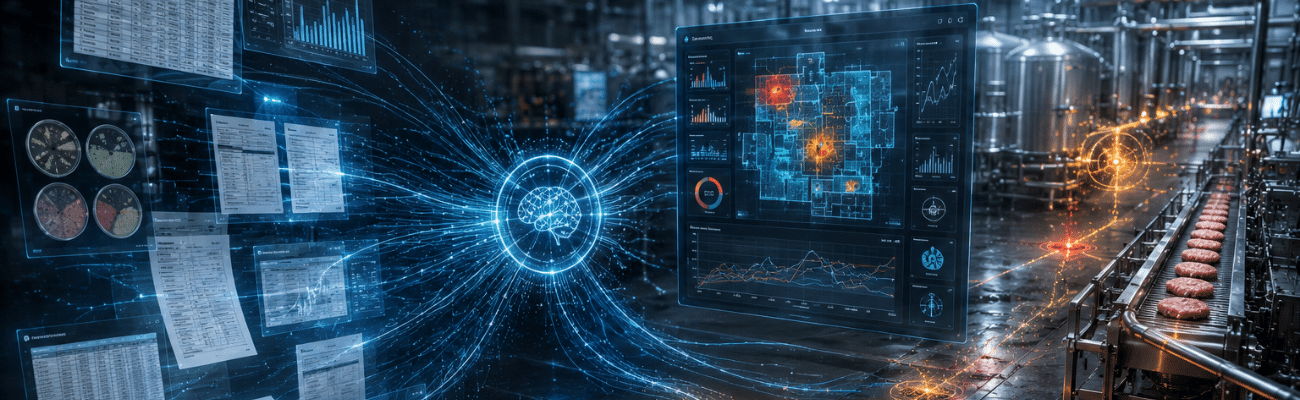
Digitalization completely transforms the nature of CIP cleaning. Instant monitoring of each cleaning step makes it possible to detect deviations while they are still occurring. It helps operators evolve into a structure that not only performs the process but also supervises it. This allows businesses to control not only the cleaning results but every second of the cleaning process.

Challenges in Today’s CIP Processes
Operational Challenges
- Cleaning durations vary depending on the operator
- Uncertainty regarding the full completion of CIP cycles
- Data errors caused by manual recording of critical parameters
Cost and Resource Management Problems
- Inability to optimize chemical usage
- Unnecessary hot water and energy consumption
- Production losses due to extended cycle times
Inspection and Documentation Deficiencies
- Difficulty in retrospective tracking
- Missing or illegible forms
- Lack of verifiable data
Advantages of CIP Digitalization for Businesses
Real-Time Control
- Instant monitoring of parameters such as temperature, duration, conductivity, and pressure
- Automatic alerts in off-parameter situations
- Verification system preventing production from starting before cycle completion
Standardized Process Management
- Consistent cleaning quality across all CIP stations
- Reduced operator dependency
- Prevention of incorrect practices
Efficiency in Resource Consumption
- Optimized chemical dosing
- Reduced water and energy usage
- Elimination of unnecessarily long cleaning cycles
Gains from Digital Tracking of CIP Processes
The table below categorizes the benefits of digital CIP management compared to manual processes:
| Category | Manual CIP | Digital CIP (Qualiqo) |
|---|---|---|
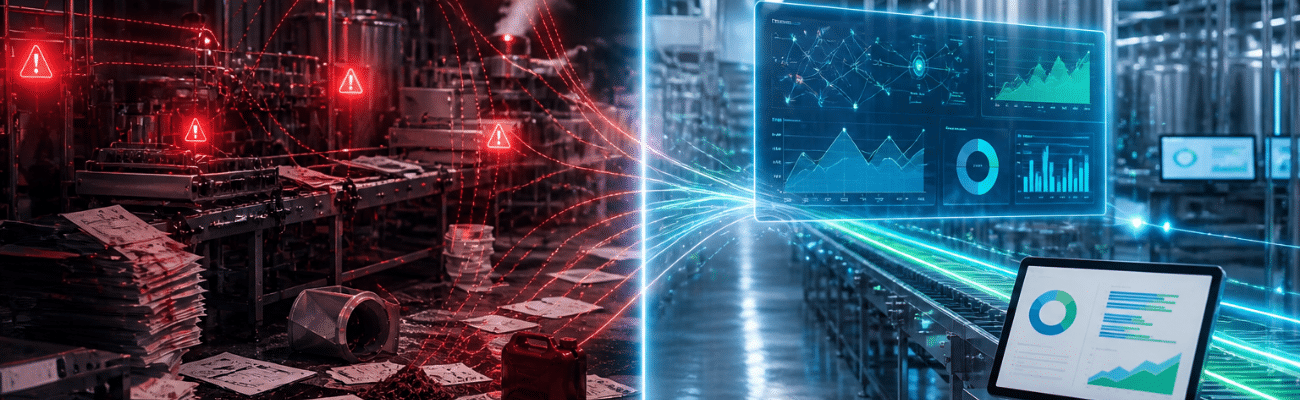
| Traceability | Incomplete and error-prone | Real-time automatic recording |
| Standardization | Operator-dependent | Unified standard across all stations |
| Parameter Monitoring | Manual entry | Instant data flow and automatic alerts |
| Auditing | Heavy paperwork | Ready reports and full traceability |
| Chemical Consumption | Difficult to control | Optimization and analysis |
| Time Management | Extended cycles | Optimized cleaning durations |
| Record Reliability | Lost papers, unreadable records | Digital archive and retrospective tracking |
This comparison highlights why companies achieve rapid ROI when transitioning from manual to digital systems.
Impact of Digitalization on CIP Process Efficiency
1. Energy and Resource Savings
With real-time data monitoring, teams can identify and optimize unnecessarily long cycles. This leads to:
- Lower energy costs
- Reduced water consumption
- Consistent chemical usage
2. Reduced Production Loss
Predictable CIP start and end times make production planning more reliable.
3. Faster Root Cause Analysis
Digital systems provide trend analysis, making it easier to identify:
- Recurrent contamination issues on the same equipment
- Chemical concentration problems
- Temperature fluctuations
Operational Gains with Qualiqo
- Standardized cleaning cycles
- 10–25 percent savings in water and chemical usage
- Significant reduction in recall risks due to improper cleaning
- Faster access to reports
- Noticeable decrease in human error
Digitalization of CIP cleaning processes is no longer optional; it is a necessary transformation driven by increasing competition, sustainability requirements, and food safety expectations. Qualiqo’s CIP management module offers not only traceability but also substantial advantages such as cost reduction, quality standardization, and audit compliance.
With digital CIP, businesses achieve more controlled, efficient, and safer production processes.
Next Steps
For food companies seeking efficiency, Qualiqo offers a reliable, all-in-one sanitation management solution. Qualiqo is designed to streamline food safety and sanitation processes for better operational control. It helps businesses track cleaning schedules, verify tasks, and meet food safety standards. Features include audit management, real-time alerts, and complete traceability across operations. With Qualiqo, food businesses embrace digital transformation and reinforce their food safety commitment.
Did you get enough information about “The Five Fundamental Principles of Food Safety Assurance“
Qualiqo is here to help you. It answers your questions about sanitation and hygiene, Lab. & EMP, IPM and Pest Control. We also provide information about the main features and benefits of the software.
We help you access the Qualiqo demo and even get a free trial.